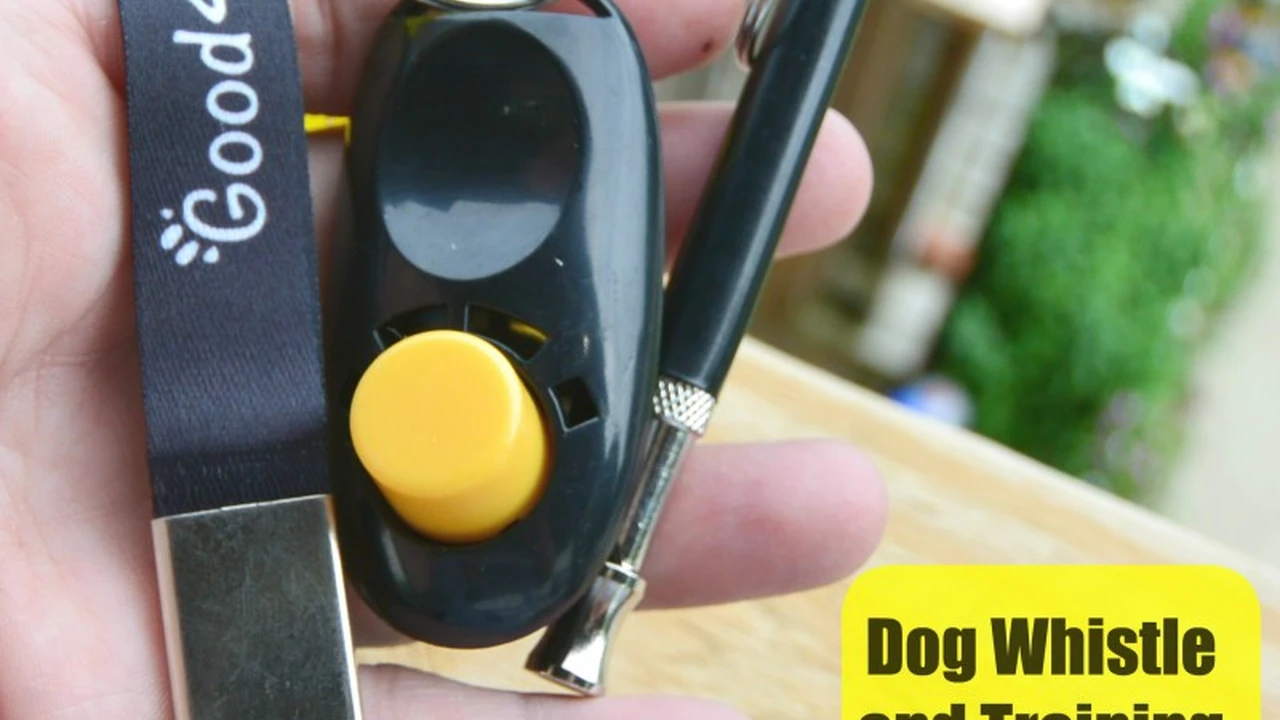
Essential Pet Training Clickers and Whistles
{ "article": [ { "title": "Essential Pet Training Clickers and Whistles", "meta_description": "Enhance your pet's holiday training with our guide to effective clickers and whistles.", "content": "Enhance your pet's holiday training with our guide to effective clickers and whistles.\n\n
\n\n
Hey there, fellow pet parents! The holidays are a fantastic time for joy, family, and, yes, even some focused pet training. Whether you're looking to teach your furry friend new tricks to impress holiday guests, reinforce good manners around festive decorations, or simply strengthen your bond, training tools like clickers and whistles can be incredibly effective. They're not just for professional trainers; anyone can use them to communicate clearly and positively with their pets. Let's dive into why these simple tools are so powerful and which ones might be the best fit for you and your beloved companion.
\n\nThe Power of Positive Reinforcement Understanding Clicker Training Benefits
\n\nClicker training is a cornerstone of positive reinforcement. It's all about marking the exact moment your pet performs the desired behavior. Think of the click as a precise, consistent 'yes!' that tells your pet, 'That's exactly what I want you to do!' This immediate feedback is crucial because pets live in the moment. If there's a delay between the action and the reward, they might not connect the two. The click bridges that gap, making learning faster and more enjoyable for both of you.
\n\nWhy a clicker and not just a verbal 'good dog'? Well, your voice can vary in tone and emotion, but a clicker always sounds the same. This consistency eliminates confusion for your pet. It's a neutral, distinct sound that becomes a powerful secondary reinforcer, signaling that a primary reinforcer (like a treat or praise) is coming. This method builds confidence in your pet, encourages them to offer behaviors, and makes training a fun game rather than a chore. It's especially great for teaching complex behaviors in small steps, known as 'shaping.'
\n\nChoosing Your Clicker Finding the Right Training Clicker for Your Pet
\n\nWhen it comes to clickers, you've got a few options. They might seem simple, but subtle differences can impact your training experience. Here are some popular choices and what makes them stand out:
\n\nThe Classic Box Clicker Simple and Effective Training Tool
\n\nThis is your standard, no-frills clicker. It's usually a small plastic box with a metal strip inside that makes a distinct 'click' sound when pressed. They're affordable, durable, and widely available.
\n\n- \n
- Pros: Very consistent sound, easy to use, inexpensive. \n
- Cons: Can be a bit loud for very sensitive or timid pets, might be awkward to hold if you're also managing a leash or treats. \n
- Example Product: Karen Pryor Clicker Training i-Click Clicker \n
- Description: This is often considered the gold standard. It's ergonomically designed to fit comfortably in your hand, and the button is easy to press without fumbling. The sound is clear and consistent. \n
- Use Case: Ideal for general obedience training, teaching new tricks, and shaping complex behaviors. Its reliability makes it a favorite among professional trainers and beginners alike. \n
- Price Range: Typically around $5 - $8 USD. \n
- \n
Button Clickers with Wrist Straps Convenient Hands Free Training
\n\nThese clickers often have a larger, more prominent button and sometimes come with a wrist strap or a coiled lanyard. This design makes them easier to hold and less likely to get lost.
\n\n- \n
- Pros: Easier to press, less likely to drop, wrist strap keeps it handy. \n
- Cons: Some models might have a slightly less crisp click sound than the classic box. \n
- Example Product: StarMark Clicker Training System \n
- Description: Features a raised button for easy clicking and often comes with a coiled wristband. The sound is clear and audible. \n
- Use Case: Great for active training sessions where you need to keep your hands free for treats or leash handling. The wrist strap ensures it's always within reach. \n
- Price Range: Around $6 - $10 USD. \n
- \n
Target Stick Clickers Combined Training Tools for Precision
\n\nThese innovative tools combine a clicker with a retractable target stick. A target stick is used to guide your pet to touch a specific point, which is excellent for teaching 'touch,' 'go to your mat,' or even complex agility maneuvers.
\n\n- \n
- Pros: Two tools in one, great for teaching precise movements and distance work. \n
- Cons: Can be a bit bulkier to carry, might take some practice to coordinate both functions. \n
- Example Product: Company of Animals Clix Multi-Clicker and Target Stick \n
- Description: This product integrates a clicker into the handle of a retractable target stick. The clicker has an adjustable volume, which is a fantastic feature. \n
- Use Case: Perfect for advanced training, teaching 'send-aways,' or working on specific body positions. The adjustable volume is a huge plus for pets sensitive to loud noises. \n
- Price Range: Approximately $12 - $18 USD. \n
- \n
Adjustable Volume Clickers Customizing Sound for Sensitive Pets
\n\nFor pets that are easily startled or very sensitive to sound, an adjustable volume clicker can be a game-changer. These allow you to choose a softer click, gradually increasing the volume as your pet becomes more comfortable.
\n\n- \n
- Pros: Customizable sound level, ideal for timid or sound-sensitive pets. \n
- Cons: Can be slightly more expensive than basic clickers. \n
- Example Product: PetSafe Clik-R Training Clicker \n
- Description: This clicker often features a unique design that allows for a softer click sound, making it less startling for sensitive pets. It's also quite durable.
- Use Case: Excellent for puppies, shy dogs, or cats who might be put off by a loud, sharp click. It allows for a gentler introduction to clicker training.
- Price Range: Around $7 - $12 USD.
The Role of Whistles in Pet Training Long Distance Communication
While clickers are fantastic for close-range, precise marking, whistles shine when you need to communicate with your pet over longer distances or in noisy environments. They're particularly popular for recall training (getting your dog to come back to you) and for working with hunting or working breeds.
Why Use a Whistle for Pet Training Consistent Recall Signals
Just like a clicker, a whistle provides a consistent, unambiguous sound. Your voice can get lost in the wind, or sound different if you're excited or tired. A whistle, however, always produces the same tone and volume (depending on how you blow it, of course!). This consistency is vital for recall, especially if your dog is off-leash and distracted by interesting smells or sights.
Different whistle tones or sequences can be used to signal different commands, such as 'come,' 'sit,' or 'stay.' This makes them incredibly versatile for advanced training or for pets that work at a distance from their handler.
Types of Training Whistles Choosing the Best Whistle for Your Dog
There's more to whistles than meets the eye. The material, pitch, and design can all influence their effectiveness.
Standard Plastic Whistles Affordable and Versatile Training Whistles
These are the most common and affordable type. They produce a clear, high-pitched sound.
- Pros: Inexpensive, lightweight, good for general use.
- Cons: Can be affected by wind, sound might not carry as far as metal whistles.
- Example Product: Acme 210.5 Dog Training Whistle
- Description: A popular choice for its consistent high pitch. It's made of durable plastic and is easy to blow.
- Use Case: Excellent for basic recall training in parks or open fields. Its consistent pitch helps your dog learn to associate the sound with coming back.
- Price Range: Approximately $4 - $7 USD.
Metal Whistles Durable and Loud Training Whistles
Often made of brass or nickel-plated brass, these whistles tend to be more durable and produce a louder, sharper sound that carries well over distance.
- Pros: Very durable, loud, excellent for long-distance recall.
- Cons: Can be cold to the touch in winter, might be too loud for very sensitive dogs or close-range training.
- Example Product: Acme 211.5 Dog Training Whistle
- Description: A high-frequency metal whistle known for its piercing, consistent sound. It's designed to be heard over long distances and in noisy environments.
- Use Case: Ideal for working dogs, hunting dogs, or any dog that needs reliable recall over significant distances. Also great for training in busy areas where background noise is an issue.
- Price Range: Around $10 - $15 USD.
Silent or Ultrasonic Whistles Discreet Training for Sensitive Ears
These whistles produce a sound in the ultrasonic range, which is audible to dogs but often inaudible or barely audible to humans. They're great for training without disturbing others.
- Pros: Discreet, less likely to disturb neighbors, can be very effective for dogs with sensitive hearing.
- Cons: You can't hear the sound, so it's harder to know if you're blowing it correctly or if it's working. Some dogs may not respond as well as to audible whistles.
- Example Product: ForeYY Dog Whistle to Stop Barking (often marketed for bark control, but effective for training)
- Description: This whistle allows you to adjust the frequency to find the perfect pitch for your dog. It's small and comes with a lanyard.
- Use Case: Best for training in quiet environments where you don't want to create noise, or for dogs that are particularly sensitive to loud sounds. It requires some experimentation to find the right frequency for your individual dog.
- Price Range: Approximately $8 - $15 USD.
Pea Whistles vs. Pea-less Whistles Understanding Whistle Mechanics
This refers to the internal mechanism of the whistle:
- Pea Whistles: Contain a small ball (the 'pea') that rattles inside, creating a trilling sound.
- Pros: Distinctive, traditional sound.
- Cons: Can freeze in cold weather, pea can get stuck if wet or dirty.
- Pea-less Whistles: Have no internal pea, producing a consistent, single-tone sound.
- Pros: More reliable in all weather conditions, consistent sound, often louder.
- Cons: Some people prefer the trill of a pea whistle.
Integrating Clickers and Whistles into Your Holiday Training Routine
Now that you know the tools, how do you use them effectively, especially during the busy holiday season?
Starting with Clicker Training Building Positive Associations
The first step with a clicker is to 'charge' it. This means creating a positive association between the click and something your dog loves. Here's how:
- Get some high-value treats (small, soft, and super tasty!).
- Click, then immediately give your dog a treat.
- Repeat this 10-20 times in a short session. Don't ask for any behavior, just click and treat.
- Do a few short sessions throughout the day. You'll know your dog understands when they hear the click and immediately look at you expectantly for a treat.
Once charged, you can start marking behaviors. For example, if you want to teach 'sit,' wait for your dog to sit naturally, click the moment their rear touches the ground, then reward. Over time, you can add a verbal cue ('sit') just before they perform the action.
Using Whistles for Recall Training Long Distance Commands
For whistle training, especially recall, consistency is key. Start in a quiet, low-distraction environment:
- Blow your chosen recall signal (e.g., two short blasts).
- Immediately reward your dog when they turn towards you or start coming.
- Gradually increase the distance and introduce mild distractions.
- Always make coming to the whistle the most rewarding thing your dog can do. Use their favorite treats or toys.
During the holidays, when there might be more people or new environments, having a reliable recall signal from a whistle can be a lifesaver, ensuring your pet stays safe and close.
Tips for Successful Holiday Pet Training Making Training Fun and Effective
- Keep it Short and Sweet: Especially during the holidays, attention spans (both yours and your pet's) can be limited. Aim for short, frequent training sessions (5-10 minutes) rather than long, drawn-out ones.
- High-Value Rewards: The holidays are a time for indulgence, and that can extend to training treats! Use something your pet absolutely loves to keep them motivated.
- Manage Distractions: If holiday guests or decorations are proving too distracting, start training in a quieter room and gradually introduce distractions as your pet improves.
- Be Patient and Positive: Training takes time. Celebrate small successes and avoid getting frustrated. A positive attitude makes training enjoyable for everyone.
- Practice in Different Environments: Once your pet understands a command, practice it in various locations – inside, outside, with different people around. This helps generalize the behavior.
- Involve the Family: Get everyone on board with the training methods. Consistency from all family members will help your pet learn faster and avoid confusion.
Common Challenges and Solutions Troubleshooting Your Training
My Pet is Scared of the Clicker Sound
If your pet is startled by the clicker, try an adjustable volume clicker or muffle the sound by putting it in your pocket or wrapping it in a cloth. You can also start with a softer sound, like a pen clicking, and gradually introduce the clicker.
My Dog Ignores the Whistle
This usually means the whistle hasn't been 'charged' enough with positive reinforcement. Go back to basics in a low-distraction environment, blowing the whistle and immediately rewarding your dog for any acknowledgment. Ensure your rewards are truly high-value.
I Forget to Click at the Right Time
It happens! Practice makes perfect. Focus on your timing. If you miss the exact moment, don't click. Just try again on the next repetition. The more you practice, the more intuitive it becomes.
My Pet is Distracted by Holiday Festivities
This is a common holiday challenge. Break down behaviors into smaller steps. For example, if your dog is too excited to 'sit' when guests arrive, practice 'sit' in a quiet room first, then with one calm person, then with more people, gradually increasing the level of distraction. Use a leash to manage their environment if needed.
Beyond the Basics Advanced Training with Clickers and Whistles
Once you've mastered the basics, clickers and whistles can open up a world of advanced training possibilities:
- Shaping Complex Behaviors: Use the clicker to mark tiny steps towards a larger goal, like teaching your dog to close a door or put away their toys.
- Distance Work: Whistles are invaluable for teaching your dog to perform commands from a distance, which is great for off-leash reliability or dog sports like agility.
- Discrimination Training: Teach your dog to differentiate between objects or commands using precise clicker timing.
- Agility and Dog Sports: Both tools are widely used in dog sports to communicate quickly and effectively with dogs on a course.
So, whether you're aiming for a perfectly behaved holiday guest or just want to deepen your connection with your furry family member, incorporating clickers and whistles into your training toolkit can make a significant difference. They're simple, effective, and truly enhance the way you communicate with your pet. Happy training, and happy holidays!
" } ] }:max_bytes(150000):strip_icc()/277019-baked-pork-chops-with-cream-of-mushroom-soup-DDMFS-beauty-4x3-BG-7505-5762b731cf30447d9cbbbbbf387beafa.jpg)